
By Malavika S. Udayan
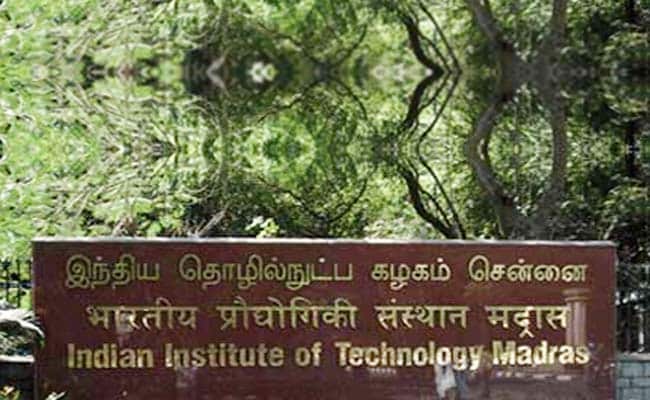
I have been living in the UK for the past two years after completing my master’s in creative writing (Poetry) from the University of East Anglia. I have been moving between jobs and finding means to earn any little income to support my writing. On one such morning, I got to know that IIT Madras has reduced its five-year-long Integrated Masters to two. I was very unhappy to know about this, as it had taken us five long tedious years at the programme to showcase our rigorous academic merit. We learned a lot during these years in courses on literature, economics, international development, language sciences, and more.
I was heartbroken to hear about this change in the curriculum. The Integrated Masters in Humanities and Social Sciences provided us a gateway – for some, this was a means to exploring the beautiful new city of Chennai, and for others this might have been about seeking plentiful opportunities. One could get into a high-paying, elite job after the course, or one could opt for higher studies that matched their interests and aptitude. Such an exposure, soon after our secondary education, proved to be inspiring for our intellectual pursuits.
Personally, I would have preferred for it to stay as a five-year-long program, or I would have liked to see another Bachelors in Humanities and Social Sciences to be introduced at IIT Madras. With each passing day, I realize how difficult it is to learn a humanities subject, including language and language sciences. To pursue the humanities, we require institutions such as archives and publishing houses, as well as corporations to provide both material and financial support. I couldn’t at all grasp the reason why the humanities programme at the IIT Madras was reduced to a two-year master’s programme. The incoming students, coming from other institutions in India after completing their BA, wouldn’t be similar to a sophomore seeing her future flourishing in a reputed center of higher education, which was pretty much my case.
The history of art education in India dates back to a time when the arts were taught along with schools of thought of Indian philosophy in such universities as Nalanda and Taxila. The syllabus included math, sciences, social sciences and life skill lessons, equipping its students with a wider vision of India’s past and present. While one can simultaneously find the Pali and Jaina schools of art between the fifth and eighth century BC, an established system of art education started during the colonial time in India’s four presidencies. Some of the prominent art institutions were Shantiniketan, Presidency College and the College of Fine Arts in Chennai, which I was fortunate enough to visit once.
With the revised system of two-year Masters at IIT Madras, a large number of students from different parts of the country will join the institute. However, we joined the institute as undergraduates – straight after our secondary education. It took me forever to complete the course. I remember, during the long five years of my Integrated Master’s program, the academic and artistic output I produced was intermittent and sparse. The shortened years of the course are similar to a vicious cut between theory, philosophy, texts, life skills and ways of living. Entry into this prestigious and important institute was to me about sharing interests, and ways of life with others who held different sets of values and beliefs.
In a world where many reputed colleges and universities in India have been shying away from offering a comprehensive humanities education, the 5-year Integrated Master’s programme at IIT Madras was a beacon of hope. The shutting down of the course is symbolic of the impoverished state of humanities education in the country.
Bio:
Malavika S. Udayan is a poet and an artist. She has published her works in Creative Critical, Arts Against Extremism, among others.
***
Like Cafe Dissensus on Facebook. Follow Cafe Dissensus on Twitter.
Cafe Dissensus Everyday is the blog of Cafe Dissensus magazine, born in New York City and currently based in India. All materials on the site are protected under Creative Commons License.
***
Read the latest issue of Cafe Dissensus Magazine, “(Re)storying Indian Handloom Saree Culture”, edited by Anindita Chatterjee, Durgapur Govt. College, West Bengal, India.
 Cafe Dissensus Everyday